

The best retailers often have a sixth sense as to which items will become top sellers, but hunches will only get even the most talented merchants so far.
To internally track inventory levels and measure which products and categories are actually selling briskly, stores of all types – from mom-and-pop shops to big-box retailers – need to assign a SKU to each product they warehouse and/or dropship. Other businesses, such as product fulfilment centers, service providers, and e-commerce platforms, also use SKUs to obtain accurate counts of goods and externally track the flow of inventory in the pipeline.
Whether you’re launching your first virtual business, expanding your local empire into a new neighborhood, or aiming to increase customer loyalty by preventing stockouts, it’s crucial to understand what SKUs are and how they can contribute to your enterprise’s success.
What Is a SKU – And What Does SKU Stand For?
SKU, pronounced “skew,” is an abbreviation for “stock keeping unit.” Used for effective inventory management, tracking, and organization, SKUs are scannable codes composed of 8-10 alphanumeric digits. They help depict an item’s distinguishing details, such as manufacturer, model number, color, size, style, and other identifying characteristics. Each SKU should be unique to a specific product, so if you sell three different wrenches, each in three different sizes, you’d have nine different SKUs.
The SKU you assign to each product can be tailored to the needs of your company. This means that if another retailer sells the same three wrenches in the same three sizes, they’ll likely use nine different SKUs to meet their own internal organization requirements.
How SKUs Are Used
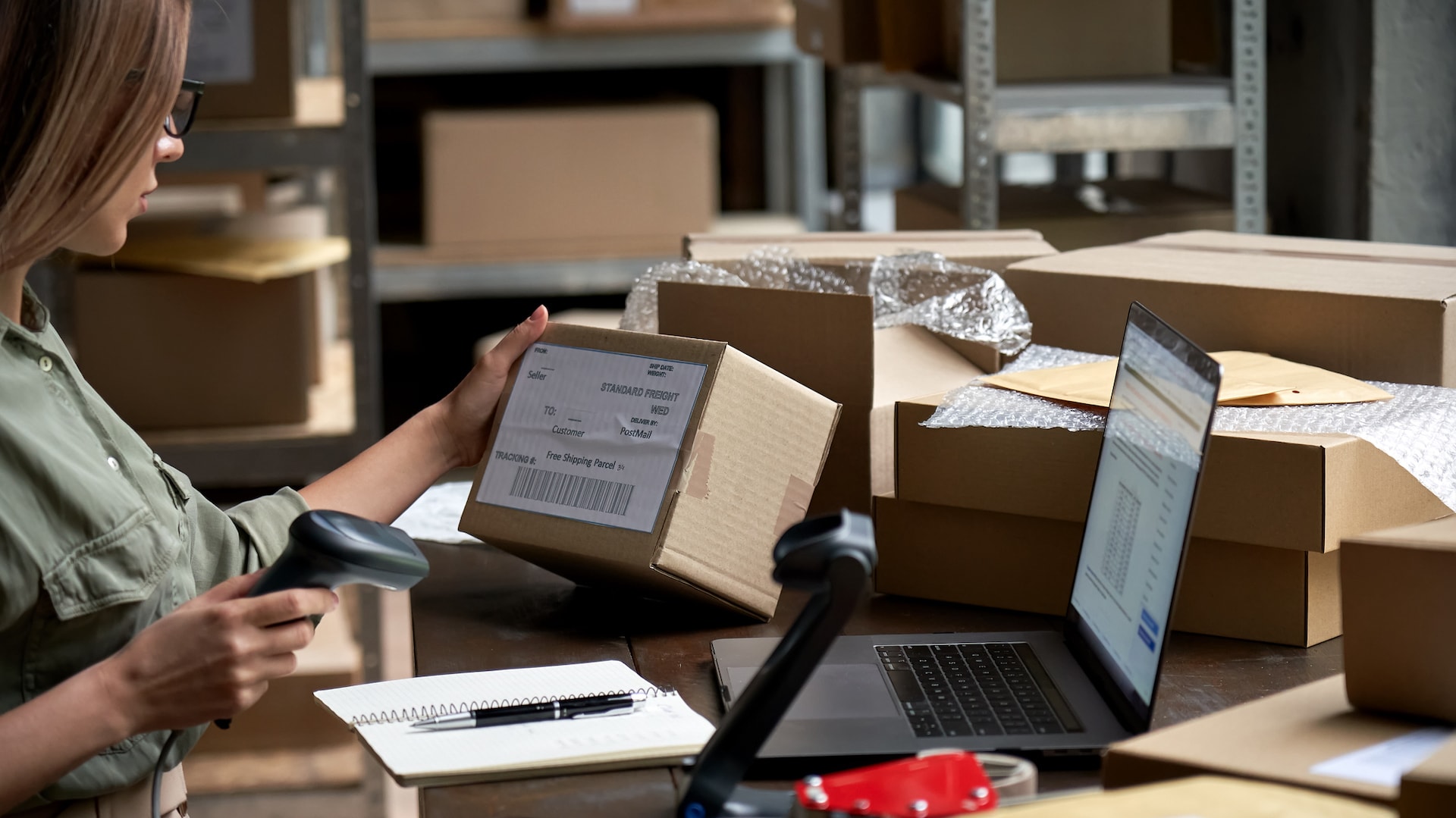
Manufacturers use SKUs to get accurate counts of inventory that has passed through its final production stage and is ready to sell, as well as counts on what has sold and how much. Retail and order fulfillment companies use SKUs to get a real-time snapshot of how much sellable inventory they have on hand. SKUs are scanned the moment a new shipment of products arrives at a stockroom or warehouse, and again when products are sold.
No matter your business model, having such information makes it easier to take accurate, real-time inventory counts. This allows companies to better predict when to replenish inventory, identify profitable items, and pinpoint sources of inventory shrinkage due to lost, damaged, outdated, or even stolen items.
A Detailed Look at How SKUs Work
SKUs can be created by hand or with an online SKU generator. When assigning SKUs to inventory, companies typically come up with their own naming convention, including product classifications and categories they want to track.
For example, a retailer’s SKU architecture could have three clear-cut parts:
- The first two or three characters might serve as the top-level identifier and reflect the broadest categories, like the department within a store, product category, or supplier.
- The next few characters might serve as the mid-level identifier, which drills down into unique subcategory specifics, like brand, color, size, gender, and style.
- The last string of characters might serve as the sequence identifier, revealing the order in which the goods were bought and processed.
Again, the SKU elements depend on the rules your business establishes and which product details you want to track. SKUs can also be modified, if necessary. For example, you could change the SKU of a certain product if you decide to start tracking different or additional factors. That said, it’s essential to have a logical, well-organized SKU architecture in place that your staff understands – SKUs are meant to make life easier, not unnecessarily complicated.
Using data derived by tracking SKUs, companies can determine which items are hot sellers, identify inventory shrinkage, and create threshold limits before running out of hot items – all of which can have an impact on the business’s bottom line.
SKUs can be entered directly into your inventory management system – and with a solution that can be directly integrated with your point of sale (POS) system, warehouse management system, or other applicable business management software, you’ll get the most out of what SKUs have to offer. For example, if your company has a production facility, a warehouse, and two retail stores, you can track product SKUs from the moment they’re produced to when they’re sold, in real time, regardless of location.
SKU Example: How Are They Generated?
Let’s say you run a boutique that specializes in high-end womenswear. Your company decides that the naming convention, which could be applied to different clothing departments, should include these elements:
[Department] - [Brand, Category] - [Color, Size] - [Sequence Identifier]
So, what is a SKU example for a specific product? If you’re adding SKUs to the contemporary women’s department’s new stock of blue cashmere sweaters from brand XY, size medium, the SKU for this particular stock of sweaters could be CW-XYCS-BM-01.
In other words,
- CW = contemporary women’s department.
- XYCS = brand XY, cashmere sweater.
- BM = blue, size medium.
- 01 = the first shipment of these sweaters added to your inventory.
Why Are SKUs Important to a Business?
Running out of a hot item is many a retailer’s worst fear. Another is phantom inventory, or when your system indicates a well-stocked item that’s actually unavailable due to shrinkage, misplacement, or human error, for instance. SKUs can remedy such stockout nightmares by allowing merchants to conduct meaningful data analysis and use that information to detect weaknesses – fraud, shoplifting, warehouse management issues, organizational troubles, etc. – and get on track to keep pace with consumer trends more effectively.
In addition, real-time SKU tracking can help your business stay ahead of reorder points and ensure that customers are never out of luck when they scan your shelves, virtually or IRL. Companies can also set threshold inventory levels and time frames in a robust SKU system to be sure products are replenished when needed. Knowing that you’re a reliable resource for certain items can, in turn, build brand loyalty and customer satisfaction.
It’s important to note that while tracking SKUs can shine a light on products selling at lightning speed, it can also highlight those moving at a glacial pace. Feeding SKU data into a sales trend analysis, for example, can help you discern which items have the lowest inventory turnover ratio so you can make more astute buying decisions for the next season. You can also leverage that precious data for other creative efforts, like running store promotions or campaigns to ramp up the sale of slow-moving stock.
Another upside: SKUs can potentially drive additional sales by showing customers multiple related options. For instance, if a shopper searches for a particular type of black knapsack, an online retailer can present similar styles that have piqued other customers’ interest based on encoded SKU information – brand, color, size, etc. The customer could end up splurging on a higher-priced item or buy an additional product, boosting the company’s bottom line. Similarly, an in-store salesperson might use a SKU to find out if an item is in stock, as well as to check on possible alternatives, potentially enhancing sales.
And there are other uses. For instance, merchants can rely on SKUs to influence the layout of a selling floor, placing products in areas advantageous to sales and the general shopping experience. Warehouses and fulfillment centers might use a similar approach, putting fast-selling SKUs in more accessible locations than slow-moving items.
How SKUs Differ From UPCs
SKUs don’t stand alone on a product label. Typically, a product is also identified by Universal Product Code (UPC) barcodes, which are another integral part of efficient inventory management.
Unlike SKUs, which are created by individual businesses and tailored to their needs, UPCs are universally used codes that are specific to the product, no matter who’s selling it. A UPC is made up of two parts: a scannable barcode, plus a unique number, usually 12 digits, beneath it. UPC barcodes are issued by GS1, a global standards body.
Businesses sometimes tie their SKUs to a product’s UPC barcode to make the item even more scannable – a useful way to expedite the inventory management process.
The Takeaway
SKU numbers are used by businesses, such as retailers, manufacturers, and product fulfillment centers, to facilitate more efficient inventory management, tracking, and organization. SKUs, or stock keeping units, are scannable and comprise a series of alphanumeric characters, uniquely composed by the company selling the items. Using data derived by tracking SKUs, companies can determine which items are hot sellers, identify inventory shrinkage, and create threshold limits before running out of hot items – all of which can have an impact on the business’s bottom line.
Photo: Getty Images