



3 Days in New Orleans:
High Culture, Lowdown Music, and Divine Food

Link copied!

October 24, 2025
Link copied!
Many travel guides will tell you that New Orleans is unique among American cities. That doesn’t go far enough. New Orleans is its own category, a veritable cultural anomaly: Caribbean heat and architecture, African rhythms, accents that mingle the Bronx and the deep South. The food is reason enough to visit and then there’s the music – bass drum you can feel recalibrating your heartbeat overlaid with exuberant trumpet, followed by a melody that can summon ghosts and long-ago sadness.
The French Quarter is the life of the party, with storied music venues like Preservation Hall, lively ghost and voodoo tours, and the debauchery of Bourbon Street right at its center. On quieter residential side streets, wrought-iron gates reveal green courtyards surrounded by balconies.
Head beyond the Quarter to explore the Garden District, where you can ride the streetcar past mansions fronted by tropical gardens; the Marigny, with its raised shotgun homes and local corner stores; and Treme, where the story of free black New Orleans is still unfolding.
Read on for our recommended three-day New Orleans itinerary and learn about the benefits that you can enjoy when booking through American Express Travel®.

Best Time to Visit
New Orleans is at its best in spring and fall. Triangulate your travel dates with the city’s busy springtime calendar to join — or avoid — Mardi Gras and Jazz Fest. Heat and humidity are no joke in subtropical New Orleans so if you’re there during the summer, schedule activities for early morning and late afternoon.

Getting There
Recommended Flights* offers Platinum Card® Members access to lower fares on select routes with Delta Air Lines. Plus, Platinum Card® Members earn 5X Membership Rewards® points* on up to $500,000 per calendar year on flights booked through American Express Travel® or flights purchased directly from airlines.
The French Quarter
Accommodations
The Roosevelt New Orleans, a Waldorf Astoria Hotel
The Barnett by Hyatt

Places of Interest
St. Louis Cathedral
Faulkner House Books
Pharmacy Museum
Dirty Coast
The Shop at the Collection
Congo Square
Preservation Hall

Eat & Drink
Central Grocery
Carousel Bar
Galatoire's
MaMou
Bayona

History and Culture Further Afield
Places of Interest
Ogden Museum of Southern Art
National WWII Museum
Julia Street Galleries
The Broadside
Observatory Eleven
Eat & Drink
Willa Jean
Cochon
Dooky Chase
Explore the Garden District, the Mississippi, and the Marigny
Places of Interest
St. Charles Streetcar
Two Chicks Walking Tour of Garden District
Magazine Street Shops
Ferry to Algiers Point
Frenchman Street Jazz Clubs
Eat & Drink
Commanders Palace
Paladar 511
Sukeban


The Roosevelt New Orleans, a Waldorf Astoria Hotel
Inside the blocklong marble and gilt lobby of the Roosevelt New Orleans, you may encounter honeymooners and elegant locals arriving for wedding receptions. This grande dame earns its romantic reputation with liveried door attendants and bell staff and attentive service. The 504-room hotel is also a favorite with families and groups, here for its spacious accommodations, rooftop pool, and ideal location across Canal Street from the French Quarter. The hotel’s Sazerac Bar is a welcome counterpoint to the boozy Bourbon Street competition: The warm, dark-paneled room features a fantastic series of early 20th-century murals and an Ascot Cup gleaming behind the bar.
Must be 21 years of age or older to consume alcoholic beverages. Please drink responsibly.


The Barnett by Hyatt
This pleasingly symmetrical Art Deco building was until recently an Ace Hotel, and retains some of that brand’s insouciance (case in point: the funky mix-and-match Roman & Williams designs). The all-day, all-night activity in the lobby/bar area and The Barnett by Hyatt’s small, scene-y pool area make this a natural choice for adults. Large airy rooms, 234 of them in varying layouts, are designed in a deco-industrial style and flooded with light from the oversize windows. Setting out to sightsee is easy; it’s a quick stroll to Lafayette Square or the French Quarter, and the St. Charles streetcar is nearby.
 *
*
 12pm check-in, when available
 Room upgrade upon arrival, when available1
 Daily breakfast for two
 $100 credit to use towards eligible charges2
 Guaranteed 4pm check-out
1Certain room categories are not eligible for upgrade.
2Eligible charges vary by property.
 3,*
3,*
12pm check-in, when available
Room upgrade upon arrival, when available1
$100 credit to use towards eligible charges2
Late check-out, when available
1Certain room categories are not eligible for upgrade.
2Eligible charges vary by property.
3The Hotel Collection requires a minimum two-night stay.
More of Our Favorite New Orleans Hotels
The English-accented Windsor Court is mannered, crisp, and elegant but not at all stuffy. Most of its guest quarters are suites, and many enjoy views of the Mississippi. The impressive art collection includes works by English master painters Thomas Gainsborough and Joshua Reynolds.
Behind its grand Beaux Arts visage on Canal Street, the 527-room Ritz-Carlton offers guests the high level of service and amenities they expect. Local recipes and produce hold a place of pride on the menu at M Bistro and live jazz and sublime Sazerac cocktails harmonize at the Davenport Lounge.
In its past life, Hotel Peter and Paul was a church, rectory, convent, and parochial school. The 19th-century buildings were renovated with key elements retained (polished wood staircases, oversized schoolroom windows, brick archways) and other edges softened into a 71-room boutique hotel. Elysian Bar, a favorite among locals, has an arching structure overhanging the bar area that was commissioned from a company that creates Mardi Gras floats.
Away from the French Quarter, the Fontenot makes its own kind of joyful noise via boldly vivid public spaces, especially the Peacock Room bar. The 235 spacious guest rooms are more serene. Kids are welcome, even at the bar where the staff may indulge them with mocktails. The location, at the corner of Poydras and Tchoupitoulas Streets, is ideal for Mardi Gras, when four distinct parades pass by.
Center Yourself at St. Louis Cathedral

You’ll see the silhouette of St. Louis Cathedral, the elegant centerpiece of the city, reproduced everywhere. The basilica is notable for being the mother church of historically Catholic New Orleans (originally built in 1727, it’s the oldest continually active cathedral in the country), and for its prime location in the French Quarter. Head inside its candle-wax-scented interior for a self-guided tour to learn about its history and design, and linger in the blessedly cool air.
Go Big at Central Grocery

Across from the French Market, Central Grocery, an Italian market dating to 1906, often has a line out the door and down Decatur Street (centralgrocery.com). But it moves quickly and snakes past shelves of specialty foods that make the wait more interesting. The main draw is the muffuletta, a massive 9”-round sandwich of stacked meats and cheeses with a sloppy chopped pickled olive relish. Order a quarter- or half-sandwich to eat at the counter with Barq’s Root Beer and Zapp’s chips – and, if you’re checking your luggage on the flight home, consider a jar of the olive relish as a souvenir.
Watch and Wander in the French Quarter

Today’s your day to focus on the Quarter and you can begin in Jackson Square, the lovely small park between St. Louis Cathedral and the Mississippi River. If you face the Cathedral, a cobbled pedestrian street called Pirates Alley runs along its left, western flank. On the alley, Faulkner House Books, once the home of writer William Faulkner, stocks curated Southern literature (faulknerhousebooks.com).
The family-friendly Pharmacy Museum, where the first licensed pharmacist in the U.S. set up business in 1822, may sound as dry as swallowing a pill without water (pharmacymuseum.org). The collection, however, is eccentric and engaging (leeches in jars, antique scoops, surgical instruments, and scales, ornately labeled medicine bottles) and the upstairs living quarters give a glimpse into 19th-century New Orleans.
In a city known for pirates, blended cultures, and offbeat tastes, shopping can be an adventure. The merch at Dirty Coast — clever New Orleans-themed T-shirts, tea towels, stationery items, coasters— is hard to resist (dirtycoast.com). At the Historic New Orleans Collection, the Shop at the Collection sells books, jewelry, and housewares, many made by locals (shophnoc.com). Along Royal Street between St. Louis and Iberville Streets, antique stores differentiate themselves by areas of focus, be it old coins, military paraphernalia, or Asian furniture.
Cross Rampart Street, the boundary between the French Quarter and Treme, to spend a moment in Congo Square. This paved plaza, surrounded by benches and trees, was where enslaved people and free people of color in pre-Civil War New Orleans gathered on Sundays to socialize, trade information, dance, and play the music from which jazz eventually evolved. Loose groups still form to make music on weekends and several festivals are held here annually.
Book the New Orleans: French Quarter Food History Walking Tour via GetYourGuide.com
Drinks with Pedigree in the French Quarter

For a classic cocktail in a classic New Orleans setting, take a seat at the Carousel Bar in the Monteleone Hotel. Since 1949, this fantastic merry-go-round-themed 25-seat bar has slowly turned (one revolution every 25 minutes) under a carnival-painted and mirrored canopy. It's a few minutes' walk to the even longer-standing Galatoire's on Bourbon Street, your clue to the spirit used in its Galatoire Special Cocktail, an inspired twist on the typical Sazerac.
Opt for French Accents or an International-Creole Fusion

Chef Tom Branighan has impeccable French bona fides – he’s a veteran of NYC’s Cafe Boulud – and grew up in southern Louisiana, so he straddles those worlds, one sophisticated and elite and the other comfortable and down-home. At MaMou, the Rampart Street brasserie he opened with sommelier partner, Molly Wismeier, Branighan flexes classic French technique to create dishes redolent with Louisiana flavors, like a red bean cassoulet, and a pork loin with local succotash au pistou.

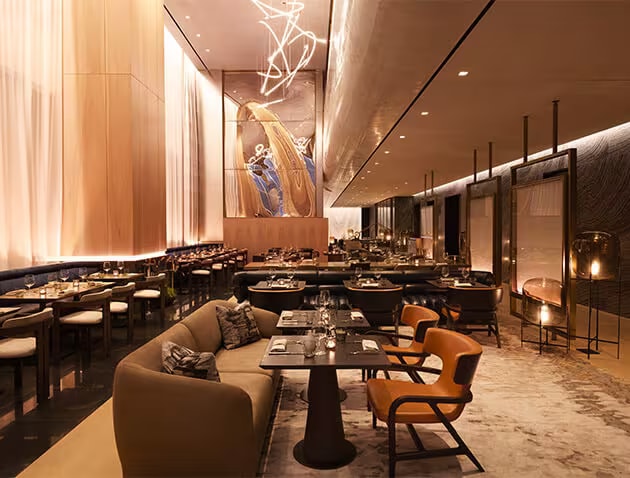
With Chef Susan Spicer’s steady hand in the kitchen turning out not-strictly Creole offerings and the lush garden area and dramatic tobacco-colored dining room inside, it’s no wonder that Bayona has held steady on lists of best New Orleans restaurants since 1990. Among the fan-favorite entrees, it’s hard to choose between the duck breast with green peppercorn sauce or the pepper- and fennel-crusted lamb; Spicer’s menu additions, inspired by what’s at the farmers market, may break the tie.
Get Schooled at Preservation Hall

There’s a burning flame being tended inside Preservation Hall (preservationhall.com). Four times a night, a high-energy band of jazz musicians plays 45-minute sets of undiluted New Orleans music to a packed house. Fans sit on benches or lean against brick walls of the small, dark space, and children are welcome. The musicians may tell corny jokes they’ve told a hundred times, but when they pick up their instruments you’ll have no doubt about the wisdom of buying that ticket.
See the South in a New Light

Over in the Warehouse/Arts District, in a repurposed 1889 brick library with a modern glass-and-stone addition, the Ogden Museum of Southern Art showcases the largest collection of Southern art in the U.S. (ogdenmuseum.org). Galleries gracefully weave together formal 17th-century portraits, striking photography, George Ohr’s whimsical and surreal pottery, and funky, sequined modern sculpture. Leave time for the gift shop, which features artist-made works for sale.
Bite into a Biscuit-Forward Brunch

The term “bakery restaurant” could make a person a little nervous about whether a meal will be substantial enough or overly sweet. Not to worry at Willa Jean, where a bacon, egg, and pimento cheese biscuit scratches the bakery and the savory itch (willajean.com). Biscuits turn up repeatedly on the menu, which covers shrimp and grits, housemade granola, and diner standards. Take your pick of cocktails and/or strong coffee – and remember to grab a cookie on the way out.
Relive History or Get Your Art On

The National WWII Museum walks a delicate line (nationalww2museum.org). In some galleries, the focus pulls in tight to share personal stories told by soldiers, civilians, politicians, and survivors and in others, it pans out to address the global machinations behind the conflict. Through film, music, military and homefront artifacts, photography, voice recordings, even a movie theater experience, the museum designers convey the war’s impact and scale. In an exhibit hall on the war in the Pacific, a gallery is illuminated to mimic sunlight shining through a thick jungle canopy. The overall result is a moving, thrilling, and humbling place to spend a few hours.

Wander the four corners of the intersection of Camp and Julia Streets, and dip into the storefront galleries to find high and low art in the Arts District. Most establishments have specialities, with a lot representing contemporary art from painters, photographers, and sculptors. But you’ll also find sequined and glittery assemblages of folk art alongside bold street art. Keep an eye out for the Arthur Roger Gallery, M Contemporary, and Callan, and follow where your tastes lead.
Award-winning Cajun or History with a Side of Shrimp Creole

At Cochon, the Cajun-focused entry of Chef Donald Link’s several award-winning restaurants, you can try New Orleans specialties you may have only heard about in country music: alligator meat, gumbo, catfish, crawfish pie. And you will not regret a bite. The refurbished warehouse space can hardly contain the big, local flavors being served. Link and his team smoke much of the pork in-house so ordering the boucherie selection is the best way to sample their deeply delicious wares.

This Treme corner spot has been drawing hungry crowds since 1939, especially after the late, legendary chef Leah Chase took over at Dooky Chase in the 1950s. Leah and her husband, Dooky, served the traditional Creole cuisine that she’d grown up with in rural Louisiana, and they supported the African American community through the Civil Rights era and beyond by hosting voter registration drives and providing a safe meeting place. It’s still a site of New Orleans pride, not just for the history and hardship (Hurricane Katrina hit the neighborhood brutally), but for its joyous reverence for regional recipes.
Take the Local Pulse in Mid-City or Rise Above It All

Check the schedule at the Broadside, a Mid-City event space, to see what’s on (broadsidenola.com). What started as a pop-up movie venue erected on an empty lot during COVID, has evolved into an exciting permanent destination for live music inside and out, and outdoor film screenings, along with food trucks, picnic tables, Adirondack chairs, an open-sided bar structure, and a restaurant, Nikkei Izakaya, open daily, for Japanese pub food and cocktails.

Head to the edge of the French Quarter and almost down to the banks of the Mississippi to reach Canal Place, a high-end mall and hotel complex, where you take the elevator up, up, up to Observatory Eleven (canalplacestyle.com). Sipping a cocktail at a window table, you’ll get an overview of where you wandered, from Bourbon Street to the dignified cathedral to the Marigny and Bywater neighborhoods.
Joyride Along St. Charles Avenue

While riding uptown on the St. Charles streetcar, the green-painted wooden cars, with windows lowered to admit the breeze, rattle and clang down the median (called the ‘neutral ground’ here), stopping at street lights and scraping by low-hanging tree branches. The streetcar is public transportation slowed to New Orleans speed. Step aboard, pay $1.25 at the farebox, find a seat on the wooden benches, and watch the city go by on your way to the Garden District.
Put Your Fate in the Hands of the Commander

Some of the biggest names associated with New Orleans cuisine did time in the kitchen at Commander’s Palace. While there’s a theme-park look about the light blue exterior – tricked out with a turret, Victorian gingerbread flourishes, and balconies – inside you’ll find a formal institution, with uniformed staff, gleaming chandeliers, and stiffly starched tablecloths. Dinner is served daily; brunch is on the weekends with live music; and lunch is a Thursday and Friday affair, with 25-cent martinis. Among the Creole classics, pecan-crusted fish topped with lump crabmeat is a highlight.
Walk off Your Lunch

While you can always hit the sidewalks of the Garden District on your own and find a mansion or two to love, Two Chicks Walking Tours have the inside scoop on the historic gossip, the architectural details, the lush, tended gardens, and the best blocks to explore (twochickswalkingtours.com). Their two-hour, small-group tours give you a sense of this historically American quarter of New Orleans.
Flip through Magazine Street’s Shops

In the mostly residential uptown area, the most commercial strip runs along Magazine Street, featuring coffee joints, dress shops, and vintage and antique stores. The mile-long stretch between Jackson and Napoleon Streets offers great options for souvenirs and even a possible Mardi Gras costume or wig. From Magpie at the uptown end to Miss Claudia’s and all the way to Peony near Jackson Street, retail distractions abound.
Rolling on the River

Head back down to the Quarter and the bottom of Canal Street to hop a ferry to Algiers Point (norta.com). It’s a short ride but long enough to educate you on the power of the seemingly slow-moving Mississippi River. The little ferry backs away from the dock on the New Orleans side and is immediately swept into the mighty current and has to chug back to equilibrium to steer straight across. Disembark at Algiers Point and walk along the levee to take in the view of St. Louis Cathedral’s magnificent profile above the French Quarter.
Convivial Dining in the Marigny or an Uptown Izakaya

California-Italian is what’s for dinner at Paladar 511, an attractive warehouse space in the Marigny. Seating, especially at long communal tables, is conducive to watching the open kitchen and exchanging recommendations with other diners. Two standouts are the Hamachi crudo and the arancini, a generous rice ball with a serving of short rib tucked into its center and topped with grated parm. You’ll want to order many items to sample and share, including the pizzas, either traditional or with less-expected toppings like bacon, egg, Gruyere, and collard greens.

After the St. Charles streetcar turns the corner at Carrollton, hop off at Oak Street and head to Sukeban, an izakaya with 16 stools at the sushi bar and a booth in the front window. The chef-owner, Jacqueline Blanchard, grew up in Louisiana but left to travel the world, cooking for top restaurants before returning to New Orleans. In 2022, Blanchard opened Sukeban, making exquisite temake, or hand rolls, using locally sourced seafood. She also owns Coutelier, a bespoke knife and kitchen supply shop that specializes in knives forged by Japanese blacksmiths (couteliernola.com).
Get Down Uptown or Hear Jazz on Frenchman Street

Tipitina’s, a live-music venue and bar, has been worth the trip uptown since it opened in 1977 (tipitinas.com). Named for a song by New Orleans music hero Professor Longhair, this corner joint hosts visiting and local bands who want to play the same stage played by the likes of Professor Longhair himself and local-legend ensembles. It’s a standing room venue, which makes for a lively dance floor.

When evening falls on Frenchmen Street, cafes and clubs open their doors and the sidewalks are washed by competing siren songs, luring you inside. You can stroll the block, slowing down to hear street musicians and wander through the outdoor art market, and hit the book store and record shop. Or you can make a commitment and catch a set or two at a club like Snug Harbor Jazz Bistro (snugjazz.com) or d.b.a. (dbaneworleans.com).
Get more out of your getaway with American Express


Recommended Flights* offers Platinum Card® Members access to lower fares on select routes with Delta Air Lines. Plus, Platinum Card Members earn 5X Membership Rewards® points* on up to $500,000 per calendar year on flights booked through American Express Travel® or flights purchased directly from airlines.
Get more out of your getaway with American Express

With the American Express Global Lounge Collection®, Platinum Card Members get access to 1,550+ airport lounges in over 500 airports around the world, including The Centurion® Lounge. Enjoy exclusive Centurion Member perks like priority check-in, complimentary premium drinks, and dedicated seating at select Centurion Lounges.
Get more out of your getaway with American Express

Make your trip unforgettable through unique tours and activities booked at gyg.me/amex.
Get more out of your getaway with American Express

Global Dining Access by Resy* gives eligible Card Members special access to sought-after restaurants across the globe when you add your eligible Card to your Resy profile. Access to exclusive reservations, premium dining experiences, Priority Notify, and more, all from the Resy app.
Get more out of your getaway with American Express


When you Shop Small®, you’re not just supporting neighborhood favorites – you’re investing in the community. Whether you’re a local or visiting, explore our map to find small businesses near you.
