



An Icon Reborn: The Renovated Waldorf Astoria New York is Back and Better Than Ever

Link copied!

September 22, 2025
Link copied!
Waldorf Astoria New York has stood as a beacon of glamour, refinement, and worldclass hospitality for nearly a century. The Midtown East hotel welcomed discerning travelers alongside celebrities, dignitaries, and a formidable list of bold-faced names since opening at its now iconic Park Avenue address in 1931. So, when it closed its doors in 2017 for renovations, many wondered what was to come for the storied property.
Following a meticulous eight-year restoration, Waldorf Astoria New York has opened. And with a number of exciting new culinary and cocktail programs, even more spacious accommodations, and thoughtful upgrades across the property, Waldorf Astoria New York promises to redefine why hotelier Conrad Hilton dubbed it “The Greatest of Them All.”
A large part of the project involved paring down of the number of rooms. When the hotel closed for the restoration, it had more than 1,400 rooms. along with 372 private residences ranging from studios to four-bedrooms. Now it counts only 375 rooms, meaning more space for guests to enjoy across every category.
It’s a groundbreaking undertaking that one architect from Skidmore, Owings & Merrill, the firm entrusted with the project, described as “a 1.6 million square foot, three-dimensional jigsaw puzzle.” That puzzle required a delicate balance of old and new, preserving important aspects of the hotel’s gilded history while modernizing the property for a new age.
Waldorf Astoria New York is ready to welcome you to its new era of luxury. Let’s look at how far it’s come – and where it’s headed.
A storied history – and a sky-high future

The hotel’s original address sat at Fifth Avenue and 33rd Street but was reinvented at its Park Avenue address in 1931 to clear room for another New York landmark, the Empire State Building.
When it reopened on Park Avenue, it set the record at the time as the tallest, most expansive hotel in the world – the first of many firsts for the legendary property. Waldorf Astoria New York quickly became known as the place to be in Manhattan, hosting milestone events such as wartime diplomatic conferences, the first Tony Awards, some of the earliest Met Galas, various Rock and Roll Hall of Fame induction ceremonies, and an iconic address by the longest-reigning monarch in British history.
From musicians to Hollywood stars – and, today, Platinum Card® Members – the hotel has long been a Manhattan destination for those seeking culture and glamour. Today, after a careful restoration, Peacock Alley is once again ready to welcome guests.
A new age of New York glamour and impeccable hospitality


Guest suites have been reimagined to balance privacy and guest experience, with separate space for living, dining, working, and sleeping. The layout channels bags directly into spacious walk-in wardrobes or separate storage areas, ensuring guest luggage avoids bedroom areas.
Bathrooms now feature double basin vanities, separate walk-in showers and toilets, and dedicated dressing spaces. A bespoke and immersive bar area in each suite allows guests to enjoy a quiet nightcap or entertain guests.
The largest new suite, the four-bedroom Waldorf Astoria Suite overlooking Park Avenue, spans more than 5,000 square feet. An ideal suite for families or groups, it boasts a full contemporary kitchen, a dining room, media and entertainment room, walk-in closets, a shining marble corridor, and more.
As guests move through the hotel, they’ll experience more spacious corridors, designed to be experiences within themselves, featuring different patterns and colors to create a sense of rhythm and invite sensory engagement. It’s all a testament to the scrupulous, uncompromising work that went into the eight-year restoration, a labor of love that is evident in every detail.
An enduring dedication to artistic grandeur

Waldorf Astoria New York’s dedication to artistic detail is evident across the property, starting with the iconic lobby. An Art Deco masterpiece, the lobby featured stately white columns, gilded accents, and striking artwork – the most famous of which might be French artist Louis Rigal’s staggering mosaic piece "The Wheel of Life." Comprising of 148,000 hand-cut marble tiles, the floor mosaic depicts the many stages of the human life cycle.
The renovation has not only preserved this important work but restored it to its original 1930s splendor. SOM’s architects meticulously pored over the hotel’s archives, cross-referencing old photographs and plans to recreate original specifications that they discovered to have been lost throughout the hotel’s first renovations. One, a striking backlit marble panel in the center of the lobby, has been recreated and now welcomes guests anew.
Another crown jewel, the Waldorf Astoria Clock, has also been given new life through the renovation. Created for the 1893 World's Columbian Exhibition (aka the Chicago World's Fair), the ornate clock welcomed guests – and marked the passing of decades of opulence – in the hotel’s lobby for over 80 years. During the renovation it was carefully disassembled and restored, enjoying a temporary home at the New York Historical Society before returning to the property.
Cole Porter’s grand piano, too, maintains its famed spot in the cocktail lounge Peacock Alley. Porter, an acclaimed composer who called Waldorf Astoria New York home for three decades until his death in 1964, was gifted the Steinway from the hotel and is an enduring tribute to the property’s history. The tradition of Cole Porter and his music continues to this day with live music in Peacock Alley from Cole & Friends.
A commitment to culinary excellence


Waldorf Astoria New York’s history of firsts extends to its dining legacy. Of course, there’s its namesake salad of fruit and nuts that was invented at the hotel at the turn of the century and remains a fixture on menus across the world to this day. Other now-classic dishes, too, have been popularized by Waldorf Astoria New York’s kitchen, from Eggs Benedict to Red Velvet Cake.
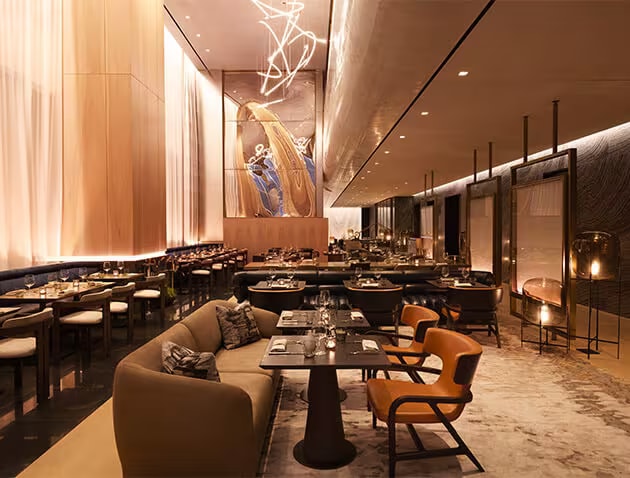
The opening turned a new page in the hotel’s rich culinary history. Lex Yard, the hotel’s signature restaurant, is an American brasserie helmed by Chef Michael Anthony, whose resume includes almost two decades as Executive Chef and Chef-Partner at Gramercy Tavern. Anthony’s menu features both à la carte dishes and a seasonal prix-fixe market menu. The restaurant’s downstairs bar offers a full raw bar and more casual, shareable plates.
Peacock Alley, the cocktail lounge named for the grand promenade that once connected the original Waldorf and Astoria hotels, long earned its reputation as a place to see and be seen. In its heyday, New York’s elite would stroll the marble corridor to socialize and display the latest fashions, giving rise to its evocative name. It retains that legacy today, with architects reimagining the bar for a new era while preserving its original grandeur. Award-winning mixology expert Jeff Bell was tapped to run the new cocktail program at the bar, along with Lex Yard, developing an exciting new menu honoring the legacy of classic New York cocktail culture while redefining the hotel bar experience.
Just steps from Park Avenue is Yoshoku, which takes inspiration from the traditional Japanese haute cuisine style of kaiseki, reimagined through a New York lens. Yoshoku offers a six-course tasting menu as well as a la carte options.
While the property has been modernized and optimized from top to bottom, the heart of what has long made Waldorf Astoria New York one of the most revered hotels in New York (and indeed, the world) remains – a commitment to uncompromising top-tier service and quiet elegance.
Get more out of your getaway with American Express


Recommended Flights* offers Platinum Card® Members access to lower fares on select routes with Delta Air Lines. Plus, Platinum Card® Members earn 5X Membership Rewards® points* on up to $500,000 per calendar year on flights booked through American Express Travel® or flights purchased directly from airlines.
Get more out of your getaway with American Express

With the American Express Global Lounge Collection® get access to 1,550+ airport lounges in over 500 airports around the world, including The Centurion® Lounge. Enjoy exclusive Centurion Member perks like priority check-in, complimentary premium drinks, and dedicated seating at select Centurion Lounges.
Get more out of your getaway with American Express

Make your trip unforgettable through unique tours and activities booked at gyg.me/amex. Terms apply.
Get more out of your getaway with American Express

Global Dining Access by Resy gives you special access to sought-after restaurants across the globe when you add your eligible Card to your Resy profile. Access to exclusive reservations, premium dining experiences, Priority Notify, and more, all from the Resy app. Terms apply.
Get more out of your getaway with American Express


When you Shop Small®, you're not just supporting neighborhood favorites – you're investing in the community. Whether you're a local or visiting, explore our map to find small businesses near you.
