


Can You Deposit Cash at an ATM?
6 Min Read | Published: May 23, 2025
This article contains general information and is not intended to provide information that is specific to American Express products and services. Similar products and services offered by different companies will have different features and you should always read about product details before acquiring any financial product.
You may be able to deposit cash at an ATM with your bank or partner institution, but limitations may apply. In some cases, you may also need to pay fees.
At-A-Glance
- You may be able to deposit cash at an automated teller machine (ATM), but not all ATMs accept cash deposits, and out-of-network machines may charge more fees or take longer to process.
- Your best option is checking your financial institution to see if they have ATMs that allow cash deposits.
- Some ATMs limit the amount of cash you can deposit at once, but many deposits are available immediately or by the next business day.
Depositing money into your bank account doesn’t have to mean stopping by a branch or waiting for a check to clear. If you’re short on time or don’t have a check to deposit through your mobile app, an automated teller machine (ATM) cash deposit can be a convenient option. But deposit availability can vary by bank and location, so here’s a step-by-step guide to ATM cash deposits and what to expect under different circumstances.
How Do ATM Deposits Work?
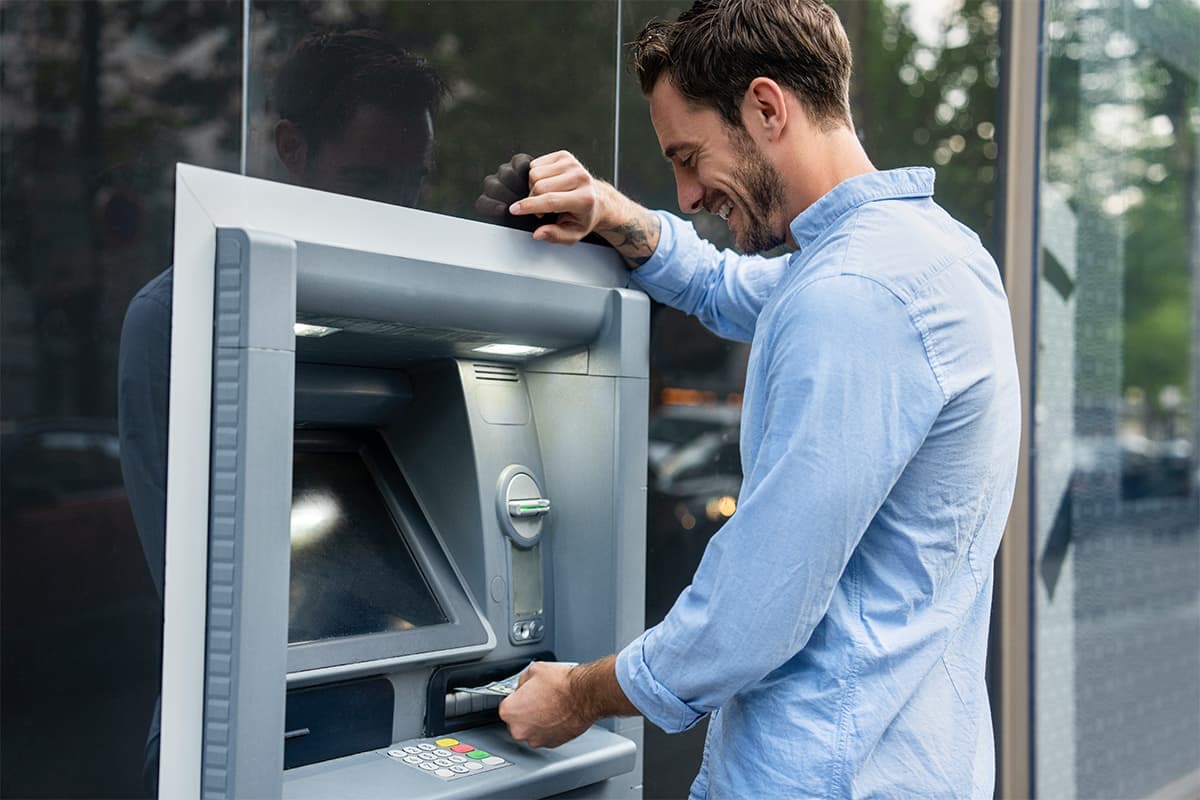
ATM cash deposits are relatively straightforward. You feed the machine your debit card, personal identification number (PIN), and cash to make the deposit. Some machines can only count so many bills at once, so if you’re depositing a large stack, you might have to run it through a few times. Additionally, online financial institutions may allow cash deposits, while others limit them to in-network ATMs.1
How to Find Banks That Allow Cash Deposits at ATMs
Both online and physical banks may allow cash deposits at ATMs, but you’ll have to check with your financial institution first. Here are some different ways you can find out where to deposit cash at an ATM:
Get in touch with your bank.
The easiest option may be to check with your bank to see whether they allow cash deposits at ATMs, and if so, where their ATMs are located. Your bank may also allow you to deposit cash with other banks or retailer-specific ATMs, even without a defined affiliation. Although uncommon, these machines may charge fees to deposit your cash.
Use an online ATM locator.
You can also use an online locator tool to find ATMs that take cash deposits. You may be able to use an online locator to find an ATM that reads your debit card and accepts cash deposits to your bank account.
Hop on your bank’s app to locate an ATM.
If your bank has an app, it may help you locate an ATM or an in-network branch. If not, you may be able to contact a service representative through the app to determine the best way to deposit your cash.
Did you know?
You can locate the nearest American Express ATM using the American Express ATM locater.
Can You Deposit Cash at Another Bank’s ATM?
You might be unable to deposit cash at an ATM outside your bank’s network unless a partnership exists.2 Even if it’s an option, your bank may charge a fee, and the ATM provider could add its own fee on top of that. Deposits at out-of-network ATMs might also take longer to process, so checking your bank’s policies beforehand is a good idea.
How Can You Deposit Cash at an ATM?
First, insert your debit card and enter your PIN. Once deposit options appear on the screen, choose “cash” and follow these steps:
- Choose the correct account.
You may have several accounts with one bank, so choose the right checking, traditional or high-yield savings account, or brokerage account where you want the money routed. - Insert your cash.
Place bills directly into the ATM. Most machines don’t require an envelope. - Confirm the amount.
The ATM counts your cash and displays the total, so verify the amount before proceeding. - Complete the deposit.
Once you confirm the transaction, the ATM processes the deposit and provides a receipt you can keep for your records.
Can You Deposit Cash at an ATM Without a Card?
Cardless ATMs let you use your compatible smartphone to make a cash deposit, eliminating the need to use your physical debit card.3 To use this option, you may need to have your bank or financial institution’s app installed on your phone. Currently, cardless ATMs may only work with larger banking systems, so smaller institutions or credit unions may not provide this feature.
You should also remember that while cardless ATMs may be secure, they can come with risks as more fraudsters attempt to hack mobile devices for banking information.4 You can help keep your devices secure by setting up multi-factor authentication, avoiding public Wi-Fi, opting for security alerts from your institution, and more.5 For quicker peace of mind, you can create long, complicated passwords for your banking apps.
Things to Consider When Depositing Cash at an ATM
Here are some potential ATM deposit limitations and considerations to be aware of:
- Some ATMs restrict the number of bills you can deposit at one time, while others may have a maximum deposit amount per transaction.6
- If you don’t have access to a deposit-accepting ATM, you may need to explore alternative ways to deposit cash, such as transferring funds from another bank account or purchasing a money order.7
- In many cases, you can access cash deposits immediately or by the next business day, and the increase may reflect online or on the printed receipt the ATM generates.8
- If you’re depositing cash abroad, you may be subject to foreign transaction fees in addition to other charges.
Frequently Asked Questions
Whether it’s better to deposit cash in person or at an ATM depends on your preferences. However, when opting for an in-person deposit, you may avoid more technical complications or errors.
An ATM might reject cash if bills are improperly folded, damaged, or marked, making it difficult for the machine to read them.9 Smoothing out crinkled bills may help.
Banks may flag cash deposits of $10,000 or more since they’re required to report them to the IRS.10 Even smaller deposits might get noticed if they seem like an attempt to stay under the reporting limit, such as splitting up a large amount into multiple smaller deposits over time.11 Banks are also required to report deposits over $5,000 if they notice suspicious activity.12
The Takeaway
ATM cash deposits can be quick and convenient, but not all machines accept them. Some banks charge fees or have limits. It’s a good idea to check with your bank about where to deposit cash, how long it takes to process, and whether fees apply.
1 “Best online banks that take cash deposits,” Bankrate
2 “Can you deposit cash at an ATM?,” Bankrate
3,4 “What are cardless ATMs and how to use one,” Bankrate
5 “Worried about mobile banking security? Follow these best practices,” Bankrate
6,7 “Can you deposit cash at an ATM?,” Yahoo! Finance
8 “What Are Bank Deposits?,” Experian
9 “Business Deposit Card (ATM) Procedures,” Harvard University Financial Administration
10,11,12 “If You Deposit a Lot of Cash, Does Your Bank Report It to the Government?,” U.S. News


Liv Gillespie is a Philadelphia-based writer with a double M.A. in English Linguistics & Literature and Secondary Education. Her work focuses on personal finance.
All Credit Intel content is written by freelance authors and commissioned and paid for by American Express.
Related Articles

How to Make Your Money Work for You
Learn how to make your money work for you. See tips on investing, making passive income, planning for retirement, building emergency savings, and more.

How to Manage Your Money Better
Learn how to manage your money and finances for the future with these smart money management tips.

Types of Savings Accounts
Savings accounts are useful to put money away for the future. Compare the different types of savings accounts to help determine which is best for you.
The material made available for you on this website, Credit Intel, is for informational purposes only and intended for U.S. residents and is not intended to provide legal, tax or financial advice. If you have questions, please consult your own professional legal, tax and financial advisors.