


How to Improve Your Credit Score
6 Min Read | Last updated: August 12, 2026

This article contains general information and is not intended to provide information that is specific to American Express products and services. Similar products and services offered by different companies will have different features and you should always read about product details before acquiring any financial product.
Earning a top credit score takes time. See factors that can impact your score, and take steps to help improve your credit score over time.
At-A-Glance
- Your credit score is based on your payment history, credit utilization, age of credit history, credit mix, and new credit accounts.
- Earning a top credit score takes time. But a thoughtful strategy focused on using credit responsibly over the long term usually leads to good results.
- Identify your opportunities for improvement, develop a strategy, and stick to it.
From making it harder to get approved for a new apartment to costing you more on your auto loan, unfavorable credit scores can sometimes make your financial dreams more challenging to achieve. But there’s no need to panic. There are several ways that you can improve your credit over time with careful planning and discipline.
Let’s take a look at what affects your credit score and offer some strategies for how you can get yours trending in the right direction.
Factors that Affect Your Credit Score
Before starting your credit score makeover, it’s helpful to understand the different elements that go into your score. Credit scores typically take into account:1
- Payment History
Your ability to pay your debts on time is generally the most significant factor in determining your credit score.2 A history of paying your bills on time can keep your score healthy, and missing payments will lower it.3 - Credit Utilization
Credit utilization refers to the amount of credit that you use against the amount of credit that you have access to. Generally speaking, you want to use as little of your available credit as possible to raise your score.4 - Age of Credit History
The longer you’ve had your lines of credit open, the more it positively affects your score.5 - Credit Mix
Having multiple types of credit (i.e., mortgages, personal loans, and credit cards) open and in use can positively impact your credit score. - New Credit Accounts
Applying for new lines of credit typically involves lenders or card issuers making a hard inquiry into your credit history. Hard inquiries can temporarily lower your credit score, so you may want to refrain from applying for multiple new credit accounts within a short time span.6
Starting to Understand Your Current Credit Score
Once you understand the elements that affect your credit score, it may be smart to review your credit report, which details what factors are currently impacting your credit score. Your credit report comes from one of the three main credit bureaus: Experian, Equifax, and TransUnion. You’re entitled to one free credit report per week from each of the bureaus,7 and you can find them at a Federal Trade Commission (FTC)-approved resource. Without reviewing your credit reports, you may not have a clear picture of what you’re trying to solve, or the areas that represent the best opportunities for improvement.
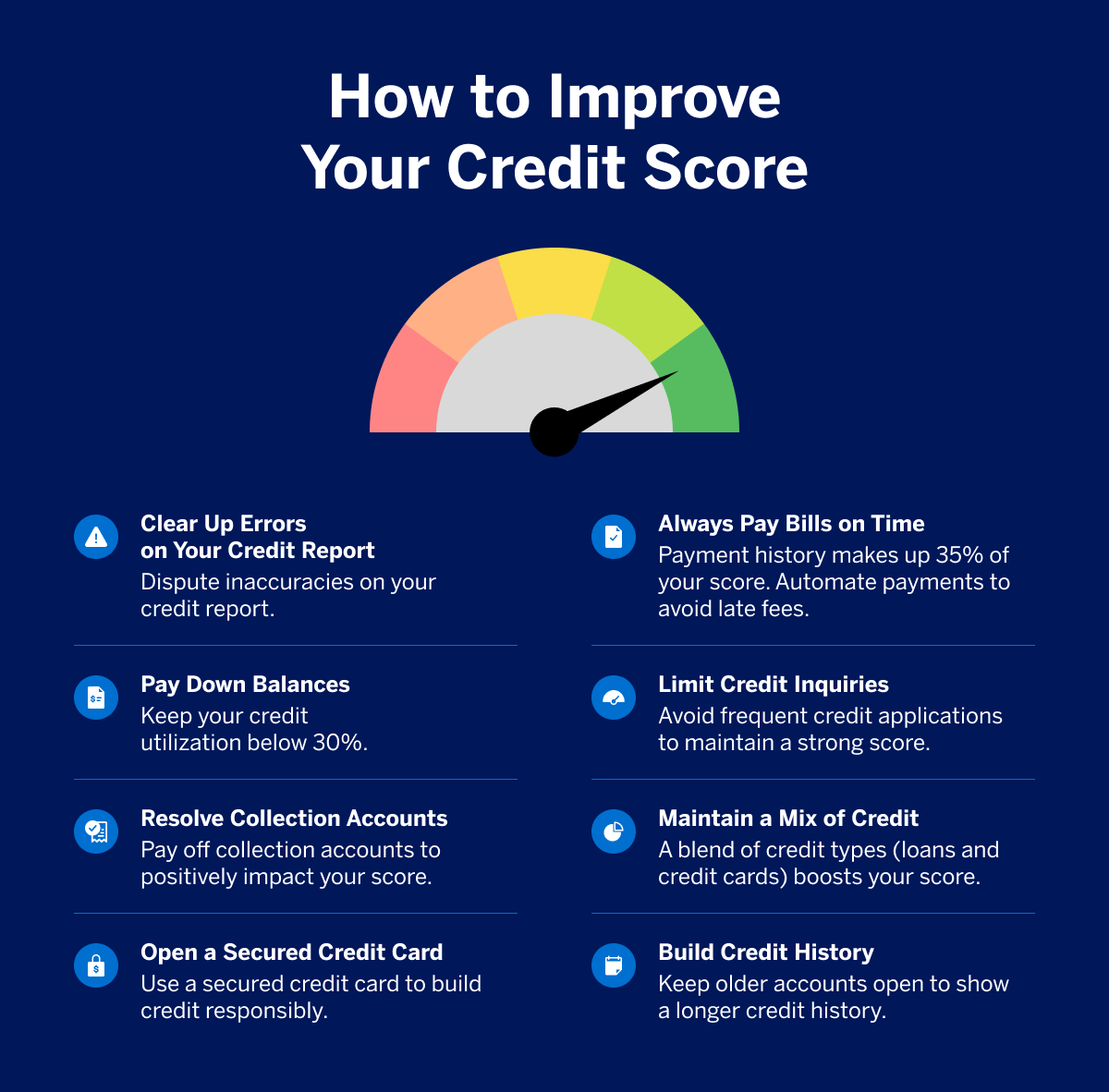
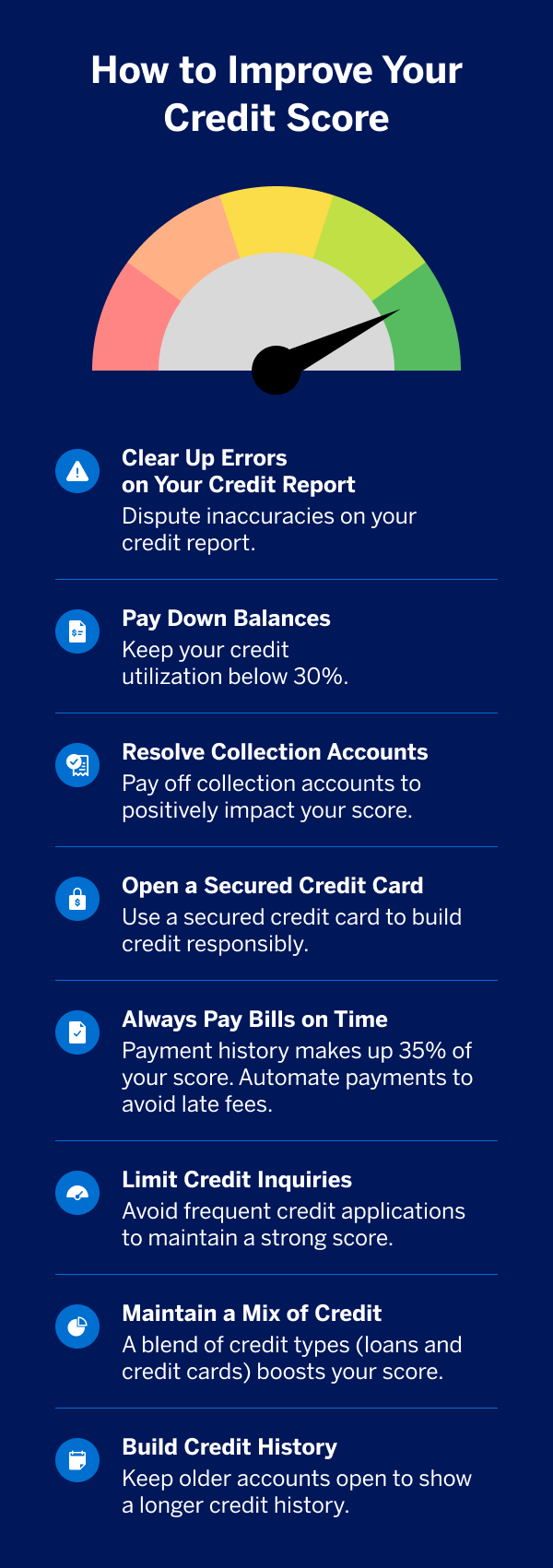
Steps That May Help You Improve Your Credit Score
- Clear Up Errors on Your Credit Report
If anything on your credit report isn’t correct, you can dispute it with the credit bureaus. Getting mistakes removed or corrected can improve your score. - Pay Down Your Balances
Making payments on your credit accounts, in conjunction with using your credit less, can lower your credit utilization and increase your score. Likewise, if you make your payments on time, your score will gradually reflect your ability to repay on schedule. - Don’t Close Credit Accounts
If you feel overwhelmed by different lines of credit, it can be tempting to start closing accounts. However, if your goal is to raise your credit score, closing accounts could have a negative impact. By closing an account, you could reduce the available credit you have access to, which could raise your overall utilization.8 Also, it will eventually lower your overall age of accounts, which also affects your credit score. - Open a Secured Credit Card
If you’re struggling with a low score and have difficulty accessing a new line of credit to improve it, you may want to consider opening a secured credit card. With a secured credit card, you put down a deposit that serves as your credit limit. If you default, the bank keeps your deposit. By making timely payments on your secured card, you may be able to improve your credit over time and graduate to an unsecured credit card.9 - Limit New Credit Accounts
Each application for a new line of credit results in a hard inquiry, and hard inquiries lower your credit score temporarily. While your credit score rebounds after you responsibly use your new line of credit, if you’re looking to raise your score quickly, you may want to resist applying for more credit for the time being.
Don’t get discouraged if you don’t see all the improvement you’re hoping for right away. Improving your credit score is a long game, and there may be a lag between when you take a positive action—like paying off a revolving credit balance—and when the creditor reports it to the credit bureaus.10
Frequently Asked Questions
Creditors don’t always report to the credit bureaus at the same time, so 30 days may not be enough time to see a significant difference in your credit score. That said, some actions you could take in the short term include correcting errors on your credit report, paying down your balances, and making timely payments.
Some people new to credit may start with a secured credit card, where users make a deposit that serves as their credit limit. Making on-time payments can help build credit. After a period of responsible use, users may be able to graduate to an unsecured credit card.
The Takeaway
You have control of your credit score, and if you focus your efforts on the actions that have the greatest impact, you can boost your score. Substantial improvement—such as moving from the poor range to excellent—will take a while. But if you stick to a strategic plan to manage your credit responsibly, you can meet your credit score improvement goal and sustain your new score for the long term.
1,2,3,4,5,6,10 “How Is Your Credit Score Calculated?,” Experian
7 “How do I get a free copy of my credit reports?,” Consumer Finance Protection Bureau
8 “How Often Is a Credit Report Updated?,” Experian
9 “What Is a Secured Credit Card?,” Experian


Allan Halcrow is a freelance writer concentrating in business, human resources, and diversity and inclusion. He is also the author of four books on management.
All Credit Intel content is written by freelance authors and commissioned and paid for by American Express.
Related Articles

How to Build Credit
Learn how to build credit, including strategies for establishing credit if you don’t have a credit history and tips to help you build credit over time.

How to Get a Perfect Credit Score
Wondering how to get a perfect credit score? It's possible, but not always feasible. See what impacts your score and what goes into a perfect credit score.

What Are the Different Credit Score Ranges?
Learn about credit score ranges by FICO® or VantageScore®. Credit scores range from 300 to 850, and a score starting in the high 600s can be considered good.
The material made available for you on this website, Credit Intel, is for informational purposes only and intended for U.S. residents and is not intended to provide legal, tax or financial advice. If you have questions, please consult your own professional legal, tax and financial advisors.