


How Many Credit Cards Should You Have?
5 Min Read | Last updated: July 10, 2026

This article contains general information and is not intended to provide information that is specific to American Express products and services. Similar products and services offered by different companies will have different features and you should always read about product details before acquiring any financial product.
Find out how the number of credit cards you have can impact your finances. Learn to balance multiple cards based on your financial goals.
At-A-Glance
- How many credit cards a person should have depends on their habits and lifestyle, how they spend money, and which benefits they value.
- If you don’t think you can keep track of multiple cards and value the simplicity of a single payment due date, then one credit card may be the right number for you.
- To responsibly manage multiple credit cards, keep track of each card’s payment due date, ensure you’re maximizing benefits, and avoid overspending.
While intimidating stories about credit card debt can often run rampant, when used responsibly, credit cards can be a seamless way to build credit while making everyday transactions. Having more than one can help you access more benefits, but if you sign up for too many credit cards and use them recklessly, you can find yourself in trouble.
Let’s take a look at how you can responsibly manage multiple credit cards, how having more credit card options can benefit you, and some of the golden rules of using credit cards.
How Do Credit Cards Impact Your Credit Score?
When thinking about how many credit cards to have, it’s important to consider how credit cards can impact your financial wellbeing. The choice to have one, some, or no credit card may affect your day-to-day finances and future ability to get credit.
In particular, credit cards impact your credit score through payment history, credit utilization, average age of credit accounts, creation of new credit card accounts, and credit mix.1 Let’s take a closer look at how each of these factors could affect your management of multiple cards.
Payment History
The most consequential element of your credit score is your history of paying off your debt. Payment history accounts for 35% of your FICO® Score.2 To keep your credit score where you want it, it’s crucial that you make your payments on time each month.
If you have multiple credit cards, it’s in your interest to stay organized, keeping on top of your monthly payment deadlines and only spending what you can afford to pay back on time.
Credit Utilization
Your credit utilization ratio is the amount of credit you’ve used compared to your total available credit. For your FICO score, the amounts owed on all of your credit card accounts comprise of around 30% of your credit score.3
Multiple credit cards may positively impact your credit utilization ratio by increasing your overall available credit. However, having high usage on multiple cards could hurt your credit score and make it difficult to lower your credit utilization ratio.
Average Age of Credit Accounts
The age of your credit accounts has an impact on your credit score, accounting for about 15% of your FICO Score.4 A longer credit history generally means a higher credit score. Instead of closing a credit card when you open a new one, you may want to consider keeping both cards so that the age of your accounts continues to grow.
Credit Mix
Credit scores also consider the types of credit you’ve sought. The more variety—credit cards, auto loans, mortgages—the better your credit score may be. FICO weighs your credit mix at 10% of your credit score.5
If you don’t have any credit cards but you have a loan that you’ve been paying off, adding a credit card could increase your credit mix. However, since all credit cards are considered the same type of revolving credit, having multiple cards doesn’t diversify your credit mix.
New Credit
Every time you apply for a new credit card, the card issuer makes a hard inquiry into your credit report to see if you qualify for the new line of credit. Hard inquiries temporarily negatively impact your credit score, and new credit accounts for about 10% of your FICO Score.6
If you’re considering opening a new credit card account, you may want to make sure that your credit score has rebounded from your last hard inquiry. Opening too many accounts at once may raise red flags with lenders,7 and too many hard inquiries in a short span could hurt your credit.
Benefits of Having One Credit Card
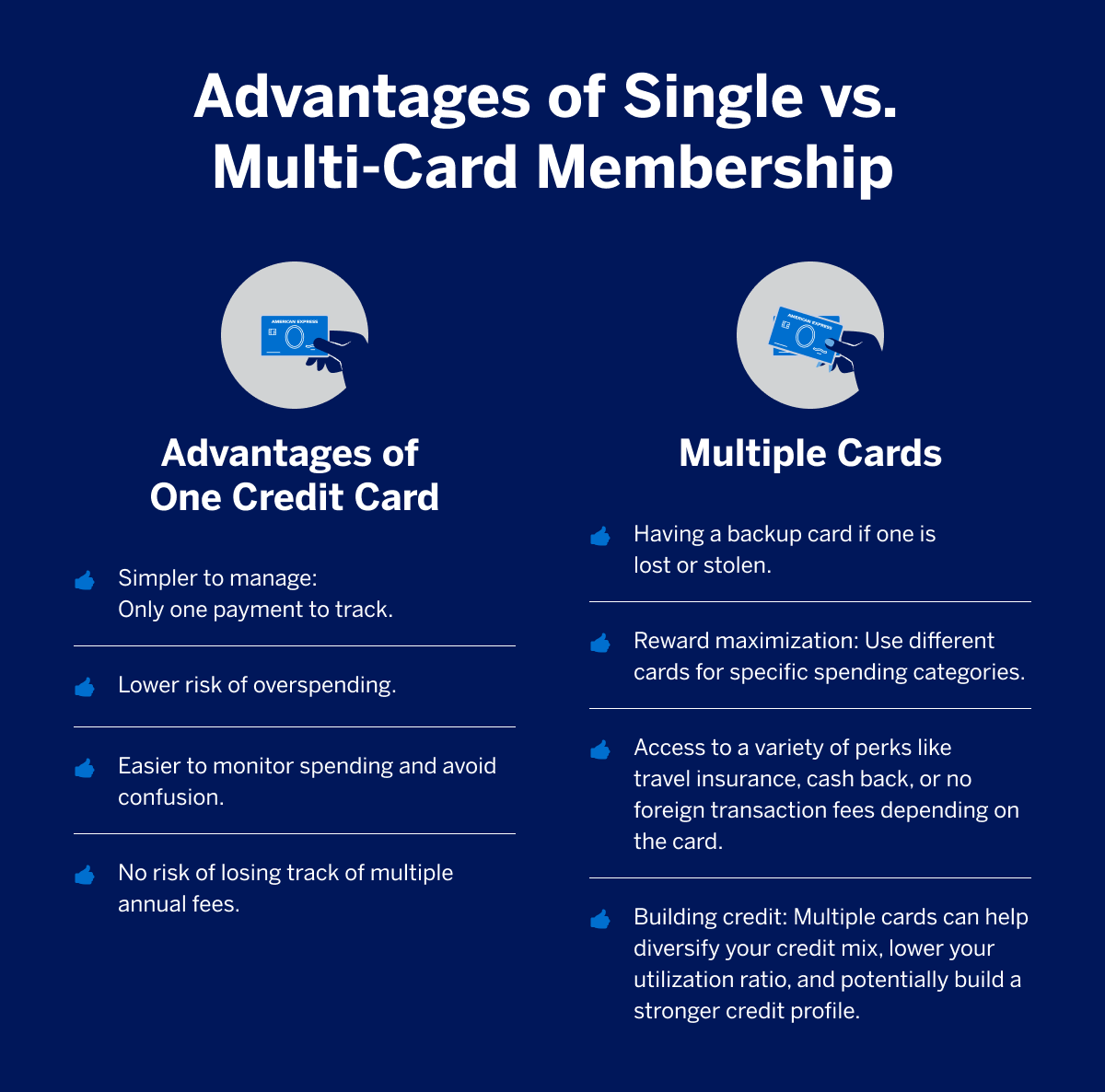
If you can handle credit responsibly but you find keeping track of spending to be a challenge, one credit card might be perfect for you. With a single credit card, there’s only one payment to keep track of, no card accounts to confuse, one bank relationship to manage, and one place to go for all your credit card spending data. You’ll only need to monitor a single account for fraud. If you find yourself tempted to overspend, one credit card could be a good place to start.

Benefits of Having Multiple Credit Cards
If you can successfully juggle payments and expenses without losing track of your spending, adding a few credit cards to your portfolio might have advantages. For example:
- More Spending Capability
If your primary credit card gets lost, compromised, or otherwise rendered temporarily unusable, it may be helpful to have a backup to use while waiting for a replacement. - Building credit
As mentioned above, credit cards play an important role in building credit. Having more total available credit may be an effective way to reduce your credit utilization ratio, and making timely payments across accounts can show lenders you can reliably repay debt. - Extra benefits
Credit cards offer different benefits and rewards for you to take advantage of. For example, you may find that your favorite, everyday credit card has foreign transaction fees, so you use a different card without them when traveling abroad. Or perhaps you use one credit card for the rewards it earns from grocery shopping, and another card for filling up your gas tank.
How Many Credit Cards Is Too Many?
Given all the potential advantages of obtaining extra credit cards, you might be asking, “If a few is good, wouldn’t a lot be better?” Having multiple credit cards makes sense for some, but there may be drawbacks as well. How many credit cards you feel comfortable managing may depend on your personal preferences and your ability to keep track of multiple payment due dates.
Some of the potential risks of adding multiple cards include:
- Missing Payments
If you feel like you would struggle to pay multiple credit card bills on time, you may want to limit the number of cards that you have. However, strategies like marking your due dates in a calendar, setting up alerts, or opting into automatic payments can help you pay your bills on time across multiple accounts. - Not Maximizing Benefits
If you have many credit cards and only use them sparingly, you may wind up with an array of different award balances that are too small to redeem for significant value. Maintaining a few credit cards that you can use regularly while benefiting from their rewards may be a smart approach. - Multiple Annual Fees
Not all credit cards have annual fees, but if you have multiple cards with fees and you’re not able to reap all of their rewards, you may want to consider downgrading the card or closing the account. - Too Many Hard Inquiries
Applying for multiple credit cards within a short time frame can hurt your credit score, so before you decide to get a new one, make sure that enough time has passed since you opened your last one.
Tips for Managing Multiple Credit Cards
If you have one credit card and find another that you think could suit your spending habits, you may be wondering how you should prepare for managing multiple cards. Here are a few ways you might be able to responsibly juggle multiple cards at once:
- Set Up Due Date Alerts
Calendar notes or smartphone alerts may help you keep track of multiple payment due dates. - Enroll in Automatic Payments
Some mobile banking apps may let you set up automatic payments for you to pay your bills on time. If you go this route, make sure you have the funds in your account to cover the payment. - Keep Track of Card Benefits
If you have multiple cards, you may have difficulty remembering which benefits apply to which card. By writing down the benefits, maybe in a spreadsheet or a note on your smartphone, you can make sure that you use each card for the right purchase. - Don’t Overspend
High balances across multiple credit cards can make your payments a headache, and if you can’t afford minimum payments or your utilization is too high, you could negatively affect your credit. Only spend what you can repay, and keep track of how much you’re spending versus your credit limits. - Pay More than the Minimum
When your credit card due dates arrive, it’s wise to try and pay as much as you can afford, rather than just the minimum. Limiting the balance you carry over each month can help minimize interest charges and help you stay on track financially.
Frequently Asked Questions
The number of credit cards that you can manage responsibly while reaping their benefits may depend on your financial strategies and your spending habits. If you already have one credit card, haven’t applied for another recently, and see a new credit card offer that you think would benefit your lifestyle, you may want to consider applying for it.
The 2/3/4 rule is an unofficial regulation that some card providers follow for approving credit card applications. When the rule is in place, the card provider may not approve you for more than two cards every two months, three cards every 12 months, and four cards every 24 months.
The Takeaway
So, how many credit cards should a person have? It's ultimately a personal choice that’s dependent on your financial management and goals. Just remember: When considering a new card, make sure it won’t cause you more financial harm than good, and choose cards that don’t just look good in isolation, but add real value to your existing financial life and habits.
1,2,3,4,5,6,7 “What’s in my FICO Scores?,” myFICO


Matt Crespi is a writer, consultant, and social science researcher focused on innovation, policy, and organizational behavior. He earned his PhD in Public Policy and Management at Carnegie Mellon University, where he co-founded the Corporate Startup Lab.
All Credit Intel content is written by freelance authors and commissioned and paid for by American Express.