



How do Credit Card Interest and APR Work?
5 Min Read | Published: 24 April 2024
Updated: 18 December 2025
Written by American Express
This page will help you better understand your Credit Card including your APR and interest rate, as well as making statement payments and spreading the cost of purchases.
• APR is an annual percentage that includes the purchase rate and additionally the Card Fee.
• APR is not the purchase rate you would pay each month if you decided to borrow money.
• APR can be higher than the purchase rate if there is a Card Fee.
• Card Fees cover the benefits and rewards the Credit Card offers.
APR stands for Annual Percentage Rate.
APR includes the interest rate applied to your balance and the annual Card fee that entitles you to all your Card benefits, like travel insurance and airport lounge passes.
Other charges like late payment fees and cash withdrawal charges are not included.

How does APR work?
APR has two main components:
1. Purchase Rate

You may also know it as interest rate. It only applies when you make a purchase and don’t pay the full balance at the end of the month.
Remember: There is no interest rate if you clear the balance at the end of each month.
2. Card Fee

If your Card includes rewards and benefits it is more likely that it will have an annual fee.
Explore our Credit Cards and learn more about the benefits of the Card you're interested in
APR can be higher than the interest rate for the cards that have an annual Card fee.
Not all our Cards have an annual Card fee. It varies from Card to Card and depends on the benefits they offer.
What is Representative APR variable?
You may see this in Credit Card ads:
• Refers to the calculation of APR that includes the purchase rate that at least 51% of our applicants get, plus the annual Card fee.
• For this calculation, we are required to asume that you borrow £1,200 and repay it over a year.
• Purchase rate will move up and down in line with the Bank of England base rate. If you get a promotional interest rate, these changes won’t apply.


Is an example for you to compare cards across the market. It has 4 elements:
The interest you would pay if you make a purchase and don’t clear the full balance at the end of the month.
The Card Fee that covers for the benefits of being a Cardmember such as dinning credits, travel lounge access, reward points and more.
To make the example comparable, all lenders assume you borrowed £1,200 for a full year. This is not the credit limit you will get.
The Annual Percentage Rate that includes the purchase rate and the card fee, and assumes you borrow £1,200 for 12 months.
How is interest charged?
Interest can be applied differently, depending how you use your Card.
Purchases:
We won’t charge interest on purchases, provided you pay the full amount you owe on each statement date, every month. Otherwise, we’ll charge interest daily from the date an amount is charged to your Account, until it’s paid in full.
Cash Advances:
With Cash Advances and balance/money transfers, we’ll charge interest daily from the date the transaction is applied to your Account, until it’s paid in full (subject to any promotional offers).

Simply put, if you pay less than your full balance by your payment due date, interest will be applied to the amount on your Account until the balance is paid in full.
However, if you make a cash withdrawal (also known as Cash Advances), interest is applied slightly differently.
In this instance, interest is applied from the date of the transaction, up until the date it is paid in full. And interest will still be applied to your Account even if you pay your balance in full for Cash Advances.
You can see your monthly interest rates at the top of your monthly statement, or in your Cardmember Agreement.
You’ll also see an estimate of the interest that will be applied to your Account, assuming you can only pay the minimum amount due.
You can keep an eye on your statement at all times, via your Online Account or the Amex® App.
Yes, we’ll always let you know in advance if your interest rate is changing, because the base rate has changed. We’ll tell you of the change on the statement before it happens. We’ll also let you know about base rate changes on our website and in the press.
If your interest rate is changing for any other reason, we’ll give you at least 30 days’ notice if it’s going up. And if it’s going down, we’ll still give you notice, but might make the change sooner.

How do you work out the interest I pay?
We work out your annual percentage rate of interest by adding your personal rate to the Bank of England base rate. We call this your ‘simple’ rate. This is the rate you’ll pay on all balances on your Card, except for cash withdrawals or any other cash transactions you make. As these have their own interest rates, that are also linked to the Bank of England base rate.
We convert your annual simple rate into a daily rate, by dividing it by the number of days in a year (365). We then apply the daily rate and add it to the amount you owe each day.For example, if you owed £1,000 and had a ‘simple’ rate of 20%, the amount you would pay in interest for one year would be 20% of £1,000, which is £200.
This amount would then be divided by the number of days in a year: £200 ÷ 365, which is 55p.
The interest is added to your Account every day. So, the following day you would pay interest on a balance of £1,000.55. We call this ‘compound interest’. And it means you pay interest on the interest you’re charged, not just on the things you buy.
Day |
Amount owned |
Yearly Interest (rate 20%) |
Daily interest |
total |
|---|---|---|---|---|
Day 1 |
£1000.00 |
£200.00 |
£0.55 |
£1000.55 |
Day 2 |
£1000.55 |
£200.11 |
£0.55 |
£1001.10 |
Day 40 |
£1022.00 |
£204.40 |
£0.56 |
£1022.56 |
Always remember, if you pay off your balance in full each month, you won’t pay any interest. You’ll also avoid other fees, like paying interest for late payments, returned payments, or over limit fees that can be added to your balance.
Bank of England base rate tracking is effective as of your statement on or after 01 October 2019.
If you pay off your entire Credit Card bill on, or before, the statement due date (within the interest-free period), you won't be charged interest.
If you opt to pay off your balance over several months, interest will be charged on the amount outstanding.
Interest will be applied up until the date you fully repay your balance.
We won’t charge you interest when you pay your statement in full by the due date, and did not carry a balance over from the previous statement, or on any late payment fees or returned payment fees.
Yes, we’ll always let you know in advance if your interest rate is changing, because the base rate has changed. We’ll tell you of the change on the statement before it happens. We’ll also let you know about base rate changes on our website and in the press.
If your interest rate is changing for any other reason, we’ll give you at least 30 days’ notice if it’s going up. And if it’s going down, we’ll still give you notice, but might make the change sooner.
How do you charge interest on cash advances or balances/money transfers?
If you ask us to make a cash advance or balance/money transfer in June, we’ll apply interest from the date we charge it to your Account and show it in your following statement.

If you pay the full balance every month, you won’t be charged interest, unless you have made a cash transaction. Interest on cash transactions is charged from the moment the transaction is made.
These have a different rate, which is also linked to the Bank of England base rate.
Your personal rate is an interest rate we set just for you. It’s based on a number of things, including your credit score and credit history. We add this to the Bank of England base rate to get your ‘simple’ rate, which is the interest rate we charge on your Card, before it compounds.

The Bank of England base rate is the interest rate the Bank of England charges other banks or building societies to borrow money.
The Bank of England decides 8 times a year if it should change the rate, based on the country’s financial situation.
Base rate is important because it’s often what other banks – and lenders like us - use to set their own interest rates.
The current Bank of England base rate is 3.75%.
When the Bank of England changes the rate, we will provide information about the change on Amex Online Services, your Amex® App and here on our website.
We will also let you know through messages on your next statement, which will include what your new interest rates will be and when the new rates become effective.

The base rate & my interest rate
This page is to help you understand how the Bank of England base rate changes may impact you.
Bank of England base rate tracking will be effective as of your Statement after October 1st 2019.
Yes it can. If the Bank of England base rate goes down, so will your simple rate, which is is the total interest rate you pay on your card.
Your personal rate is an interest rate we set just for you. It’s based on a number of things, including your credit score and credit history.
We add this to the Bank of England base rate to get your ‘simple’ rate, which is the interest rate you pay on your card, before it compounds.
The Bank of England base rate affects how much we have to pay to borrow money.
If the base rate goes up, so does the cost of borrowing money – for both lenders and customers.
Similarly, if the base rate goes down, we can pass these savings on to you.
If the base rate changes, the change will usually apply to your credit card from the day after your next statement date.
- If the base rate goes up in the 60 days before you take out the card, we won’t apply the change until the day after your second statement date.
- If the base rate goes down, we’ll apply the change the day after your first statement date.
In both cases, we’ll include a message on your statement to let you know about the change, what your new rates will be and when the new rates become effective.
Yes we will. If your interest rate is changing because the base rate has changed, we’ll let you know about base rate changes on our website and in the press.
We’ll also tell you this in a message on your statement before the change happens.
If your interest rate is changing for any other reason, we’ll give you at least 60 days’ notice if it’s going up. If it’s going down, we’ll still give you notice but might make the change sooner.
Managing your account
Your Card is designed to help you plan ahead when making purchases of all sizes, safe in the knowledge that you can pay all or part of your balance later.
Stay up to date. Turn on alerts
Take control by setting up alerts to notify you about your Account.
- You’ve spent a certain amount in a month.
- You’re within a certain amount of your credit limit.
- A weekly balance update.
- You have a payment due.
- We’ve received your payment.
You can register via the Amex App, on your Online Account here, or by speaking with one of our Customer Care Professionals by calling the number on the back of your Card.

Whatever you’re looking to purchase, by using your American Express Credit Card, you can enjoy an interest free period of up to 56 days when you pay in full and on time.
How does it work?
Purchase any item the day after your statement date and you could enjoy an interest free period of up to 56 days.
When your statement is produced, you have the following payment options:
- Pay the minimum amount due on your Credit Card. This is typically a small percentage of your whole balance, plus any interest and fees. However, this can vary by product, so check the minimum due amount on your statement by logging in here.
- Pay the Full statement balance. Paying this way ensures you will have no interest applied to your Account.
- Pay an amount of your choice, between the minimum amount due and full statement balance.
Our payment options are designed to give you flexibility when you need it. Find out how to pay using these methods, here.
Glossary
Statement period
The dates for which your statements are issued and report transactions for. Generally, your statement period will be every 30 days, and actual dates can vary slightly from month to month.
Interest
Type of charge incurred as a result of borrowing money and not repaying in full within the indicated time. Interest is usually expressed as an annual percentage rate, also known as the interest rate.
Closing balance
The amount you owe at the end of a particular statement period.

Interest on all balances that result from purchases (including associated fees, such as non-sterling Transaction fees), interest charges and service charges (such as the copy statement fee), is charged at the per annum rate found in your Terms and Conditions (variable) if the statement balance is not paid in full, as per your Credit Card agreement. Cash advances, balance transfers, and the interest charged on those non-purchase balances do not accrue interest at the standard. If you do not pay your balance in full you may incur interest on your outstanding balance. You will still be required to pay your minimum due payments.
If you only make minimum payments, it will take you longer and may cost you more to clear the outstanding balance. Interest free period - Maximum 56 days on purchases if you pay the full amount you owe on each statement date on time every month. No interest-free period on balance/money transfers or cash advances (subject to any interest-free promotional offer). See app store listings for operating system information.
American Express Services Europe Limited has its registered once at Belgrave House, 76 Buckingham Palace Road, London, SW1W 9AX, United Kingdom. It is registered in England and Wales with Company Number 1833139 and authorised and regulated by the Financial Conduct Authority. Copyright© 2022. American Express Company. All Rights Reserved.
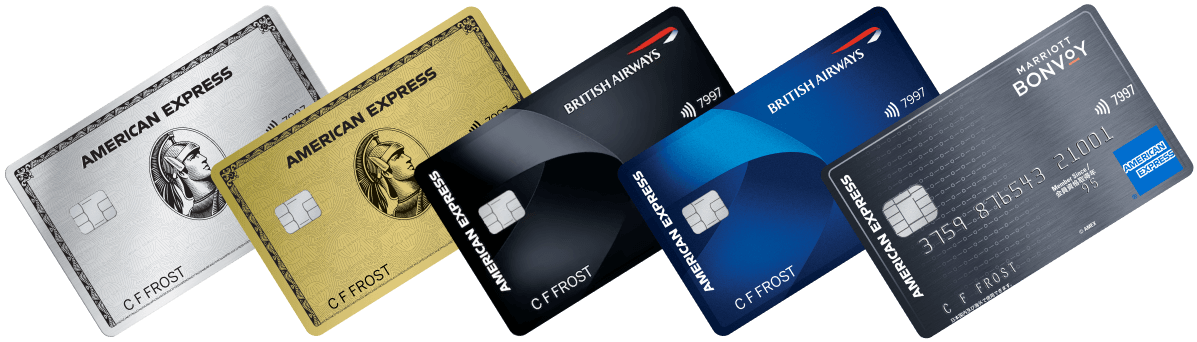
Find the Amex® Card that fits your lifestyle and see what other benefits await year-round.