


What Is a Credit Score?
6 Min Read | Last updated: July 10, 2026

This article contains general information and is not intended to provide information that is specific to American Express products and services. Similar products and services offered by different companies will have different features and you should always read about product details before acquiring any financial product.
Understand what a credit score is, how it works, and how it’s calculated to build a strong financial foundation.
At-A-Glance
- A credit score is a number that summarizes your credit history.
- There are two dominant credit scoring models—FICO® and VantageScore®—and though they have their slight differences, they’re both trusted sources.
- Understanding how scores are calculated can help you take action to establish a positive financial future.
What is a credit score? In short, it’s a three-digit number that summarizes your credit history. But how you arrive at your credit score isn’t so simple, and it could have a significant impact on your financial outlook. Since it’s commonly used to predict your likelihood of paying back your debts, your credit score may affect your ability to take out a mortgage, get a new credit card, or even rent an apartment.
Checking your credit score can help you understand what types of credit you can take out now, and with financial planning, you can set a goal for the score you’d like to have in the future. Let’s take a closer look at the ins and outs of credit scores so you can understand how they impact your day-to-day life and make a plan to get yours where you want it.
Credit Score Basics
Once you take out a loan or get a credit card, you start to build a credit history that reflects your ability to pay off debt. Generally speaking, your credit score may vary slightly based on:1
- The credit bureau whose report is used to generate your credit score
- The scoring model used to calculate it (the two best-known being FICO® and VantageScore®)
- The version of the scoring model that was used to generate it
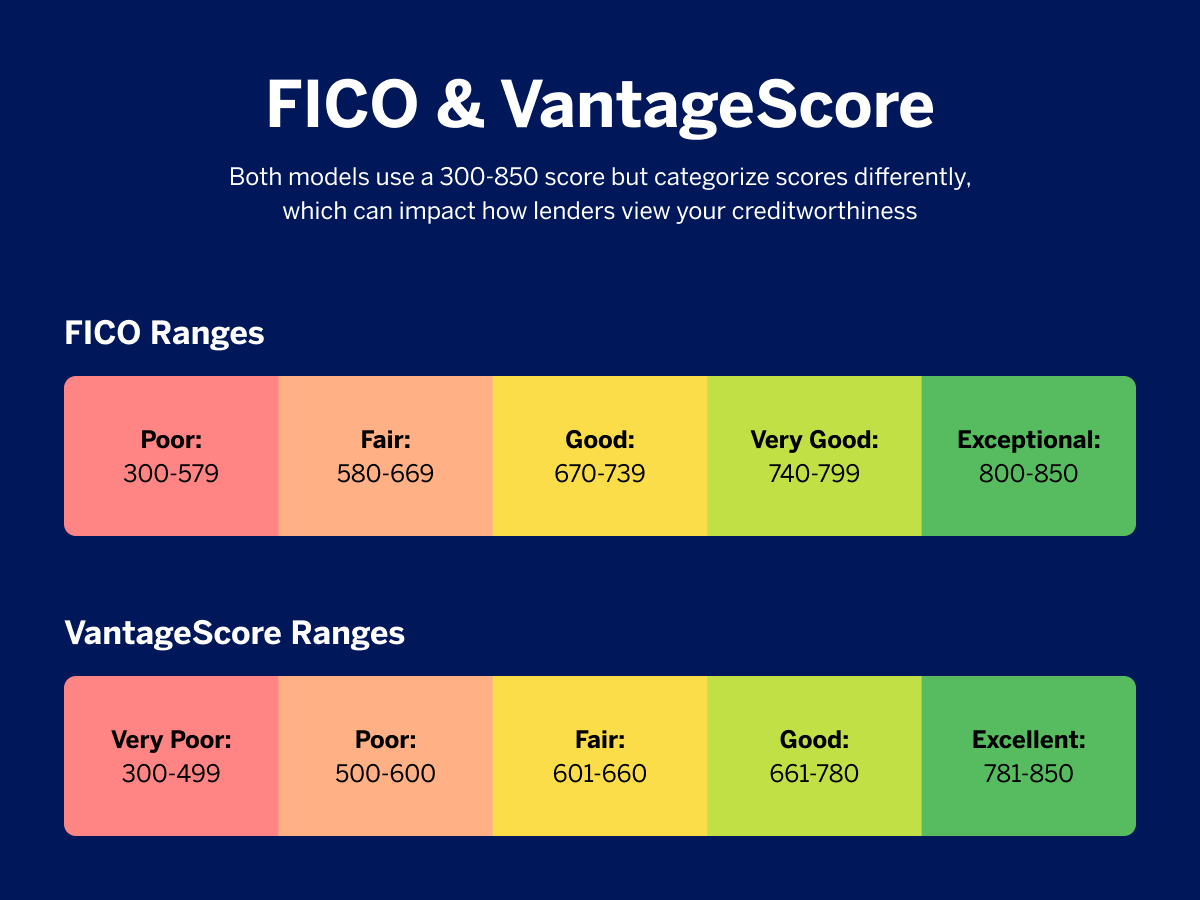
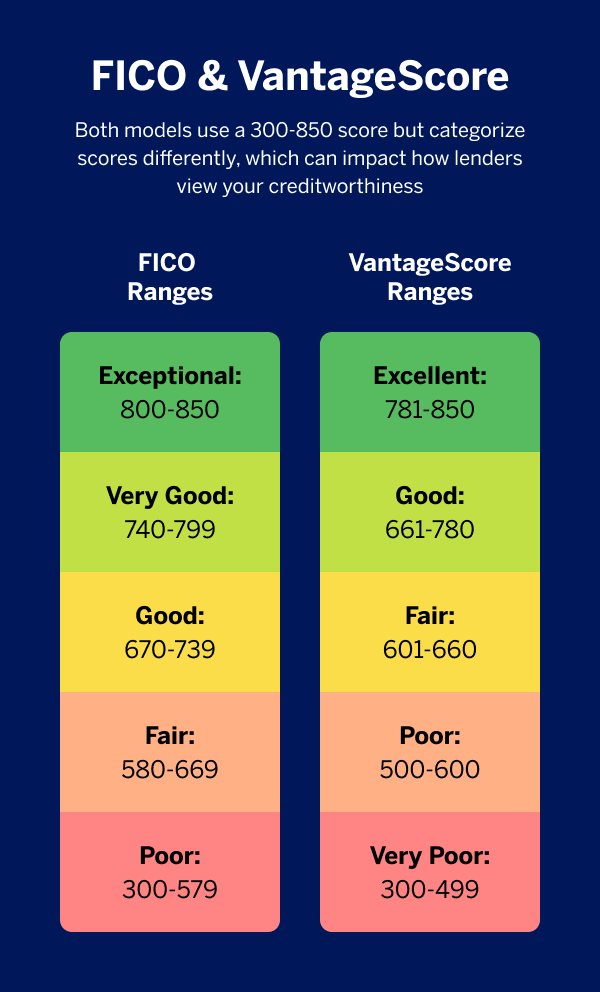
Different factors may affect your credit score across different models, like your history of making timely payments, the length of time that you’ve had credit, the types of credit you have, and the percentage of your available credit that you use. While different scoring models may have different credit score ranges, FICO’s model ranges from 300-850.2
How Exactly Is Your Credit Score Calculated?
The most commonly used scoring model produced by FICO weights the different credit score factors in the following way:3
- 35%: Payment History
Payment history reflects whether you have paid your creditors on time. - 30%: What You Owe
The amount you owe is shaped by your credit utilization, meaning how much of your available credit you have used. The less you’ve used, the stronger this part of your score may be. - 15%: Length of Credit History
Length of credit history is based on how long your accounts have been open and the timing of your most recent account transactions. A longer credit history generally may mean a higher score. - 10%: Credit Mix
Your credit mix is the various ways in which you’ve borrowed money, such as credit cards, installment loans, mortgages, retail accounts, and so on. A diverse mix may work in your favor. - 10%: New Credit
New credit reflects the recent hard inquiries on your credit report and the new accounts you’ve opened. A lot of activity in this category may lower your score.
It’s important to note that FICO may use context to inform its scores. FICO has specific scores designed for mortgage and auto lenders, for instance.4 If you’re curious about the score that’s being used to assess your credit, you may want to ask your lender.
FICO Score vs. VantageScore: Which Credit Score Should You Trust?
FICO and VantageScore are both commonly used and trustworthy sources of credit scores. While they examine the same data based on your credit history, they may report slightly different scores, which boils down to a few small distinctions.
The first difference is how they consider your credit history. FICO starts recording a credit score once your first credit account has been open for at least six months.5 VantageScore, on the other hand, creates a score as soon as you open an account.6
Another difference is how they consider hard inquiries. Both models treat multiple hard inquiries within a given time period as a single inquiry, allowing borrowers to shop for different types of loans without significantly affecting their scores. However, FICO’s updated time frame for multiple hard inquiries is 45 days, and VantageScore’s is 14 days.7 It may benefit you to shop for loans within 14 days if you’re unsure which scoring model lenders are using.
Lastly, FICO and VantageScore may view your bills sent to collections differently. All FICO scores typically ignore collections under $100, but an earlier version of FICO that some lenders may still use considers paid and unpaid collections equally.8 The most current versions of FICO differentiate between paid and unpaid collections.9 VantageScore, on the other hand, includes all unpaid collections in its score, even those below $100, but doesn’t factor in collections that you’ve already paid.10
Different Credit Bureaus Produce Different Credit Scores
The data that’s used by the FICO or VantageScore model generally comes from one of the three largest credit reporting bureaus—Equifax, Experian, and TransUnion. These companies collect information from creditors about your debts and payments. Some lenders don’t report debt accounts to all three bureaus, so each one could have a different picture of your credit score.11
Frequently Asked Questions
A “good” credit score varies from lender to lender and may depend on the type of credit you’re applying for. For FICO Scores, a score between 670–739 may fall in the “good” range.12
Credit scoring models typically consider your ability to repay your debts in a timely manner most, and then, second, how much of your available credit you use and how much you owe. Other factors include the different types of credit you have access to, the length of time you’ve had credit available to you, and when you last opened a new line of credit.
FICO and VantageScore are both trusted sources of credit scores, but they differ in a few minor ways. For example, some FICO models ignore all debts sent to collections under $100, paid or unpaid, whereas your VantageScore may reflect any amount sent to collections, but not ones you’ve already paid off.
The Takeaway
Your credit score is a numeric summary of your credit history that predicts your risk as a borrower, and it can have a significant impact on your financial well-being. By making timely payments and using your lines of credit responsibly, you may be able to improve your credit score. If you need help understanding your credit score or making a plan to build credit, reach out to a financial professional.
1, 4, 5, 6, 11 “Why Is My Credit Score Different When Lenders Check My Credit?,” Experian
2,3 “What Is My Credit Score?,” Experian
7,8,9,10 “The Difference Between VantageScore® Credit Scores and FICO® Scores,” Experian
12 “What is a Credit Score?,” FICO


Allan Halcrow is a freelance writer concentrating in business, human resources, and diversity and inclusion. He is also the author of four books on management.
All Credit Intel content is written by freelance authors and commissioned and paid for by American Express.
Related Articles

How Often Does Your Credit Score Update?
See when, why, and how often credit scores update. Learn how to track your credit score's progress for free and see how much your credit score may change.

What Is a Credit Report and Why Is it Important?
Understanding what a credit report is could be confusing. Learn what information a credit report contains and how to get your credit report for free.

How to Get a Perfect Credit Score
Wondering how to get a perfect credit score? It's possible, but not always feasible. See what impacts your score and what goes into a perfect credit score.
The material made available for you on this website, Credit Intel, is for informational purposes only and intended for U.S. residents and is not intended to provide legal, tax or financial advice. If you have questions, please consult your own professional legal, tax and financial advisors.